Is a New Console War Brewing?
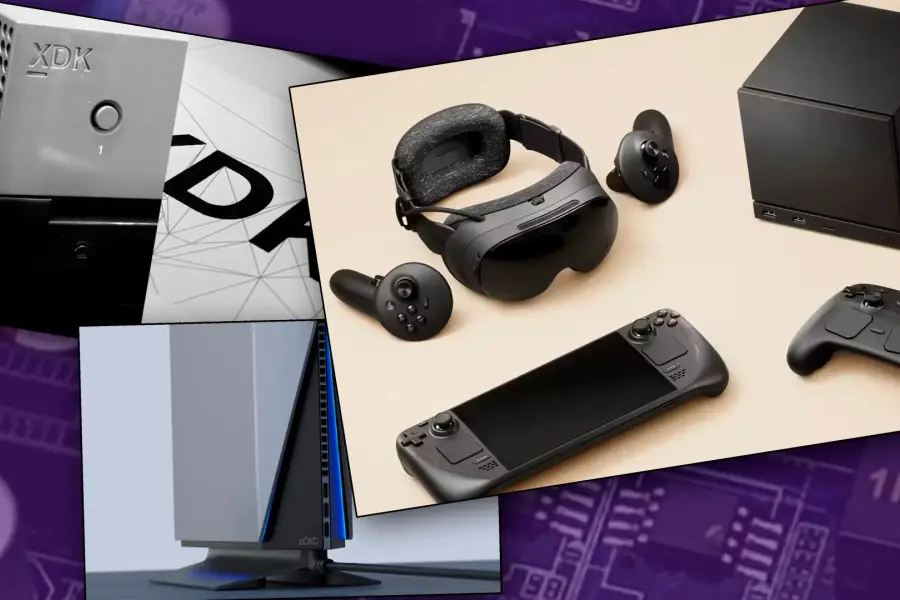
While most players are busy discussing new releases and service updates, something more interesting seems to be taking shape behind the scenes. The next “console war” may end up looking very different from the previous ones.
This time the question may not be which box is more powerful, but which platform philosophy will survive.
On one side stands the traditional closed console ecosystem.
On the other, a growing attempt to merge console and PC gaming into a single platform model.
Microsoft and Project Helix: Xbox as an Extension of PC
Microsoft has been moving toward a blurred boundary between console and PC for several years now. According to recent reports, the next generation of Xbox — internally referred to as Project Helix — is being designed around the idea of a platform that can function both as a console and as part of the broader PC ecosystem.
This approach appears in several areas.
First, Microsoft continues developing Xbox mode for Windows, an interface and system intended to run games in a more console-like environment without the typical desktop distractions.
Second, the company keeps expanding Play Anywhere and unified development tools that allow studios to ship the same game across PC and Xbox with minimal friction.
There is also the ongoing collaboration between Microsoft and AMD. As with previous Xbox generations, the hardware is expected to use a custom AMD SoC, and technologies such as FidelityFX Super Resolution are increasingly part of the graphics pipeline strategy. Beyond raw performance, this alignment strengthens compatibility with the broader PC hardware ecosystem.
If the strategy works, Xbox may ultimately become less of a standalone console and more of a gaming layer built on top of Windows and the PC platform.
Sony: Doubling Down on a Closed Ecosystem
Against that backdrop, the strategy of Sony appears to be moving in the opposite direction.
Reports from industry media suggest the company is scaling back the practice of releasing major single-player PlayStation titles on PC and reinforcing the importance of console exclusivity. Multiplayer and service-oriented games will likely remain multiplatform, but flagship single-player releases may increasingly stay tied to PlayStation hardware.
This positions PlayStation more firmly as a classic closed platform, where the main selling points remain exclusive titles, brand identity, and a tightly controlled user experience.
In many ways, Sony seems comfortable occupying the role of the “Apple of the console world” — a powerful, polished ecosystem with clearly defined boundaries.
Valve and the Return of the Steam Machine
A third player in this evolving landscape may be Valve.
Following the success of the Steam Deck, Valve has steadily expanded the reach of SteamOS. Originally built for handheld hardware, the operating system is now appearing on other devices as well.
This has reignited discussion about a possible return of the Steam Machine, but under very different circumstances than the original 2015 attempt.
Several things have changed since then:
- SteamOS has matured significantly
- Proton now allows thousands of Windows games to run on Linux
- the Steam ecosystem is already deeply familiar to PC players
Instead of another traditional console, Valve could effectively offer a streamlined living-room PC built around SteamOS.
Closed Consoles vs Open Platforms
Taken together, these developments suggest that the next industry conflict may not follow the traditional console rivalry model.
In the past, the console wars were fairly straightforward:
- PlayStation vs Xbox
- exclusives vs exclusives
- hardware power vs hardware power
Now the dividing line may shift.
PlayStation remains the flagship of the closed console ecosystem.
Xbox is moving closer to PC integration.
SteamOS represents a more open, PC-derived platform model.
Where players once chose between two consoles under the TV, the future choice could look more like this:
- a fully closed console ecosystem
- a console-PC hybrid platform
- an open living-room PC environment
Sony Still Holds One Major Advantage
Despite all these shifts, Sony retains one powerful advantage: simplicity.
The PlayStation experience remains straightforward: buy the console, turn it on, start playing.
More open platforms tend to offer greater flexibility, but they also introduce friction — compatibility layers, configuration options, different launch environments. For many players, that complexity can be a real barrier.
What It Means for Players
It may still be too early to call this a new console war. But the direction of the industry is becoming clearer.
Sony is reinforcing the closed console model.
Microsoft is turning Xbox into part of the broader PC ecosystem.
Valve is gradually building an alternative platform around SteamOS.
If these trends continue, the next battle for the living room may not be about devices at all, but about competing philosophies:
a controlled console ecosystem
versus
more open platforms growing out of PC gaming.
And for the first time in a long while, the outcome of that contest does not look predetermined.