Mount Haruna and the Art of Going Sideways
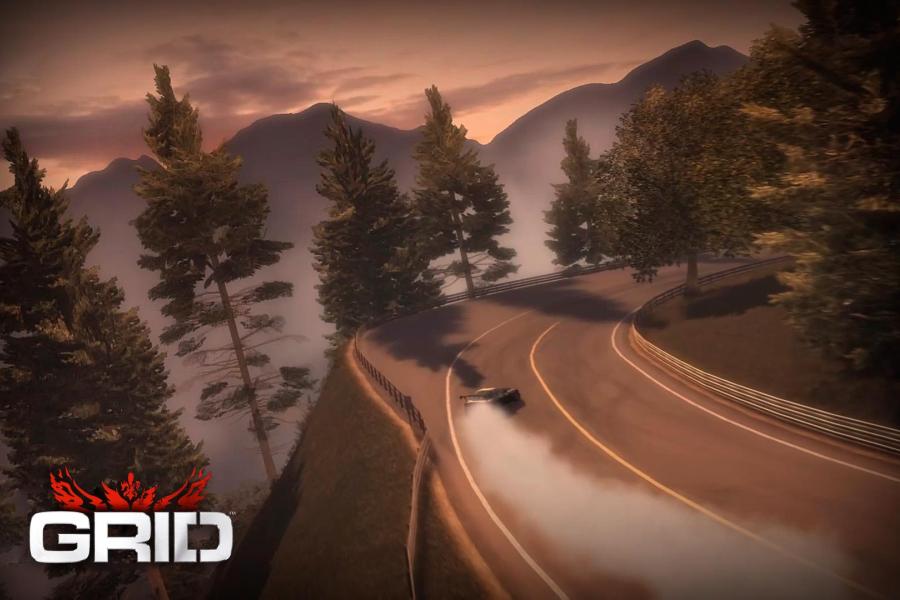
Some roads exist only for one purpose.
Mount Haruna is one of them.
Long before racing games started scanning real tracks with lasers, Haruna had already become legendary thanks to Initial D — the manga that turned a quiet mountain road into the most famous downhill course in car culture. When Race Driver: GRID released in 2008, the manga was still ongoing and wouldn’t finish until 2013. Back then there was no TikTok endlessly recycling AE86 clips and eurobeat edits.
You either knew what Haruna meant — or you didn’t.
And if you did, seeing it appear in a racing game instantly felt special.
The Downhill Drift Festival
The J-Speed Super Two drift cup in GRID takes place on Haruna’s downhill section, and it captures the exact fantasy every Initial D fan once had: taking a lightweight Japanese drift car and sending it down a narrow mountain road sideways.
In this case the weapon of choice is the Mazda RX-7 — a car that looks like a perfect drift machine but demands real patience from the driver. It reacts quickly, snaps into oversteer easily, and punishes rough inputs.
Which makes the downhill runs both frustrating and addictive.
Unlike wheel-to-wheel racing, drift events here are judged runs. You don’t see your rival on the road — only your own attempt, your line, and the score that appears at the finish line.
Everything depends on technique.
Entering the Corner
Downhill drifting in GRID rewards a surprisingly authentic rhythm.
Before the turn comes the setup: a short brake tap to shift weight forward and loosen the rear tires. Enter too fast and the car refuses to rotate. Enter too slow and the drift dies before it begins.
The ideal line isn’t about clipping the apex like in circuit racing. Instead, the entry starts wider, letting the car rotate early and slide through the corner while maintaining momentum downhill.
Once the rear steps out, the work really begins.
Throttle, Balance, Commitment
Hairpins on Haruna demand constant throttle control.
Too much gas and the RX-7 spins instantly. Too little and the drift straightens out before the corner ends. The trick is to feather the throttle, letting the car float sideways while keeping the engine alive.
Sometimes a quick pull of the handbrake helps initiate the angle. Other times it only kills the momentum and ruins the flow. Learning when to use it — and when to trust weight transfer instead — becomes the difference between a messy slide and a clean downhill run.
When it works, the car feels almost weightless.
And that’s when the score starts climbing.
A Strange Alignment of Eras
What makes this episode oddly satisfying today is how perfectly it fits the current moment.
In the late 2000s, GRID’s Japan events were simply another regional theme inside a large racing game. Today the cultural context has shifted. Initial D nostalgia, eurobeat edits, and downhill drift clips are everywhere online.
Suddenly the Haruna events in a 2008 racing game feel incredibly modern.
To lean into that atmosphere, the most aggressive moments of each run were paired with eurobeat tracks — the same kind of music that once defined the entire downhill drifting aesthetic.
It turns the run into something halfway between gameplay and tribute.
Still Alive in 2026
What’s surprising is how well Race Driver: GRID holds up.
The handling remains satisfying, the drift scoring system still feels fair, and the atmosphere of the Japanese events — night roads, tight mountain sections, and a focus on style rather than pure speed — creates something unique.
Honestly, if the game stripped away every other region and mode and kept only the Japanese content — Haruna, night Touge roads, and the various drift events — with a small graphical refresh, it would probably still land perfectly in 2026.
Because some ideas don’t age.
They just wait for culture to catch up again.
Full Episode
The full downhill run and the J-Speed Super Two victory on Mount Haruna can be watched here:
Race Driver GRID (2008) — Part 10 Mount Haruna | Downhill Drift | Mazda RX-7